Pages

Showing posts with label 03 Leviticus. Show all posts

Monday, February 10, 2014

Overview of Leviticus

Lev 1.1-17; Law; Instructions for burnt offerings (atonement)
Lev 2.1-16; Law; Instructions for grain offerings (memorial)
Lev 3.1-17; Law; Instructions for peace offerings
Lev 4.1-35; Law; Instructions for sin offerings (forgiveness)

Lev 5.1-13; Law; Various instructions associated with the sin offering
Lev 5.1.14-6.7; Law; Various instructions associated with guilt offerings
Lev 6.8-30; Law; Various instructions associated with burnt offerings, grain offerings, anointings and sin offerings
Lev 7.1-18; Law; Various instructions associated with guilt offerings and peace offerings
Lev 7.19-21; Law; Instructions concerning touching unclean things
Lev 7.22-27; Law; Further instructions regarding Food laws and food offerings
Lev 7.28-36; Law; Further instructions regarding peace and wave offerings
Lev 7.37-38; Law; Summary statement for all the sacrifices and offerings

Lev 8.1-36; Story; Ordination of Aaron and his sons
Lev 9.1-21; Story; Aaron makes his offerings to the LORD
Lev 9.22-24; Story; The LORD accepts their offerings
Lev 10.1-3; Story; Aaron’s sons die after offering an unauthorized fire
Lev 10.4-7; Story; Moses advises caution lest God continue to pour out his wrath
Lev 10.8-11; Law; The LORD gives Atom instructions for alcohol, holy and clean items, and teaching
Lev 10.12-15; Story; Moses follows up with some offerings
Lev 10.16-20; Story; Explanation given as to why the sin offering was not eaten

Lev 11.1-47; Law; Food laws;
Animals (11.1-8),
Fish (11.9-12),
Birds (11.13-19),
Insects (11.20-23),
Requirements for dead animals (11.24-28),
Unclean animals (11.29-38),
Touching unclean animals (11.39-45),
Summary statement (11.46-47)

Lev 12.1-8; Law; Purifications; Childbirth, circumcision, purification waiting, offerings presented
Lev 13.1-44; Law; Unclean laws; Skin diseases and management
Lev 13.45-46; Law; Instructions for those with skin diseases
Lev 13.47-59; Law; Unclean laws; Stained or soiled garments

Lev 14.1-32; Law; Cleanliness; Instructions for cleansing skin diseases
Lev 14.33-53; Law; Cleanliness; Instructions for cleansing houses
Lev 14.54-57; Law; Cleanliness; summary statement
Lev 15.1-30; Law; Cleanliness; Instructions for bodily discharges
Lev 15.31-33; Law; Cleanliness; summary statement

Lev 16.1-28; Law; Festival, Day of atonement, for Aaron, his house, his people, the holy place and tent of meeting.
Lev 16.29-34; Law; Festival, Day of atonement, frequency and summary statement
Lev 17.1-9; Law; Temple Worship, Instructions to only sacrifice at the tent of meeting
Lev 17.10-16; Law; Food and drink; Prohibition against drinking or eating blood
Lev 18.1-23; Law; Sexual immorality, Prohibitions against incest, Adultery, Idolatry, sodomy, bestiality
Lev 18.24-30; Law; Sexual immorality, warnings and summary statement

Lev 19.1-37; Law; Assortment of laws, some repetitions of previous laws
Lev 20.1-9; Law; Idolatry, laws against child sacrifice and sorcery
Lev 20.10-21; Law; Sexual immorality, punishments for offenses
Lev 20.22-26; Law; General reminder to be holy as the LORD and keep all the commands
Lev 20.27; Law; Sorcery, punishment for sorcery
Lev 21.1-24; Law; Priests, Instructions for how the priests are to live and marry

Lev 22.1-9; Law; Priests, Reminder they are not to serve unless they are clean
Lev 22.10-17; Law; Priests, Lay people and priests children
Lev 22.18-30; Law; Worship, Requirements for acceptable offerings
Lev 22.31-33; Law; Summary statement

Lev 23.1-44; Law; Festivals and Holidays,
Introduction (23.1-2)
The Sabbath (23.3)
The Passover (23.4-8)
The Feast of Firstfruits (23.9-14)
The Feast of Weeks (23.15-22)
The Feast of Trumpets (23.23-25)
The Day of Atonement (23.26-32)
The Feast of Booths (23.33-43)

Lev 24.1-4; Law; Priests; Instructions on maintaining the lamps
Lev 24.5-9; Law; Priests; Instructions for the bread of the tabernacle
Lev 24.10-23; Story-Law; Israelite, Egyptian son is stoned for blasphemy, eye for an eye rule
Lev 25.1-7; Law; Festival, The sabbath year
Lev 25.8-22; Law; Festivals and holidays, The jubilee year
Lev 25.23-34; Law; Property, Redemption of property
Lev 25.35-46; Law; Charity, Care for poor family members
Lev 25.47-55; Law; Charity, Care for poor strangers

Lev 26.1-2; Law; Repeated command not to worship idols and to maintain the Sabbaths
Lev 26.3-13; Law; Blessings for obedience
Lev 26.14-45; Law; Punishments for disobedience
Lev 26.46; Story; Reminder these are the statutes, rules and laws given to Moses on Mt Sinai
Lev 27.1-33; Law; Laws about vows and redeeming what is the LORD's

Lev 27.34; Story; Reminder these are the commandments given to Moses on Mt Sinai

Leviticus 26-27 God will remember

From Leviticus 26-27


Overview
Lev 26.1-2 Law; Repeated command not to worship idols and to maintain the Sabbaths
Lev 26.3-13 Law; Blessings for obedience
Lev 26.14-45 Law; Punishments for disobedience
Lev 26.46 Story; Reminder these are the statutes, rules and laws given to Moses on Mt Sinai
Lev 27.1-33 Law; Laws about vows and redeeming what is the LORD's
Lev 27.34 Story; Reminder these are the commandments given to Moses on Mt Sinai


Passage and Comments
The first chapter details the blessings and curses for keeping or failing to keep the covenant law. Here are some of the important bits of the sequence.

[3] “If you walk in my statutes and observe my commandments and do them, (Lev 26:3)

Then the passage describes a whole heap of blessings for obedience. The command doesnt necessarily demand perfect and sinless obedience but faithfulness to the covenant. The best blessing is below.

[11] I will make my dwelling among you, and my soul shall not abhor you. [12] And I will walk among you and will be your God, and you shall be my people. [13] I am the LORD your God, who brought you out of the land of Egypt, that you should not be their slaves. And I have broken the bars of your yoke and made you walk erect. (Lev 26:11-13)

God will be with them. But now here comes the warning for disobedience.

[14] “But if you will not listen to me and will not do all these commandments, [15] if you spurn my statutes, and if your soul abhors my rules, so that you will not do all my commandments, but break my covenant, (Lev 26:14-15)

Notice there is a chain of similar phrases, and God uses the punishment to help them repent.

[21] “Then if you walk contrary to me and will not listen to me, I will continue striking you, sevenfold for your sins. (Lev 26:21)

and then,

[23] “And if by this discipline you are not turned to me but walk contrary to me, [24] then I also will walk contrary to you, and I myself will strike you sevenfold for your sins. (Lev 26:23-24)

and then,

[27] “But if in spite of this you will not listen to me, but walk contrary to me, [28] then I will walk contrary to you in fury, and I myself will discipline you sevenfold for your sins. (Lev 26:27-28)

The bit we are missing is that finally they will be exiled. As we read more through the Old Testament we will find out this happens.

[34] “Then the land shall enjoy its Sabbaths as long as it lies desolate, while you are in your enemies' land; then the land shall rest, and enjoy its Sabbaths. [35] As long as it lies desolate it shall have rest, the rest that it did not have on your Sabbaths when you were dwelling in it. (Lev 26:34-35)

When the exile happens the land will have a rest from Israel... Notice now the following verse.

[46] These are the statutes and rules and laws that the LORD made between himself and the people of Israel through Moses on Mount Sinai. (Lev 26:46)

If one were to read the whole Torah in a block. Leviticus stands out. These look like phrases inserted in the Leviticus book to assure readers Moses received these instructions at Mt Sinai. Why then did he not write them down with all the other laws God gave? This suggests a later date of authorship for Leviticus.

[44] Yet for all that, when they are in the land of their enemies, I will not spurn them, neither will I abhor them so as to destroy them utterly and break my covenant with them, for I am the LORD their God. [45] But I will for their sake remember the covenant with their forefathers, whom I brought out of the land of Egypt in the sight of the nations, that I might be their God: I am the LORD.” (Levi 26:44-45)

God promises to remember his covenant. 'Remember' is an important word associated with the covenant.


Story of Israel
Israel was often reminded of the covenant. Unfortunately in unhappy circumstances. They were told when they broke it! But while Israel was unfaithful, God remained faithful.


Story of Jesus
We see in the Gospel God is faithful to his promise and he sends Jesus to call Israel back to repentance and devotion to God. One thing to always keep in mind when reading the gospel is its Old Testament background and the promises God has made in the past. God is faithful to his promises.

Sunday, February 09, 2014

Leviticus 24-25 Redeemed from slavery

From Leviticus 24-25


Q. If you had slaves, how would you treat them?

Overview
Lev 24.1-4 Law; Priests; Instructions on maintaining the lamps
Lev 24.5-9 Law; Priests; Instructions for the bread of the tabernacle
Lev 24.10-23 Story-Law; Israelite, Egyptian son is stoned for blasphemy, eye for an eye rule
Lev 25.1-7 Law; Festival, The sabbath year
Lev 25.8-22 Law; Festivals and holidays, The jubilee year
Lev 25.23-34 Law; Property, Redemption of property
Lev 25.35-46 Law; Charity, Care for poor family members
Lev 25.47-55 Law; Charity, Care for poor strangers

Passage and Comments
The following quotes were interesting because they show some of the laws which govern the care of people who sold themselves into slavery. Slavery brings up a whole series of negative images, however read these to see the picture presented in the bible.
[35] “If your brother becomes poor and cannot maintain himself with you, you shall support him as though he were a stranger and a sojourner, and he shall live with you. [36] Take no interest from him or profit, but fear your God, that your brother may live beside you. [37] You shall not lend him your money at interest, nor give him your food for profit. [38] I am the LORD your God, who brought you out of the land of Egypt to give you the land of Canaan, and to be your God. (Lev 25:35-38)
So here we have some of the basic obligations for the care of the poor and how to lend them money when they are in trouble.
[39] “If your brother becomes poor beside you and sells himself to you, you shall not make him serve as a slave: [40] he shall be with you as a hired worker and as a sojourner. He shall serve with you until the year of the jubilee. [41] Then he shall go out from you, he and his children with him, and go back to his own clan and return to the possession of his fathers. [42] For they are my servants, whom I brought out of the land of Egypt; they shall not be sold as slaves. [43] You shall not rule over him ruthlessly but shall fear your God. (Lev 25:39-43)
Now, family members and possibly any of the other Hebrew people were not to be treated as slaves when they sell themselves to pay off their debts. Part of the logic behind this is their own freedom from slavery in Egypt. If they have been freed by the LORD, they should not allow slavery for their own people again.
[44] As for your male and female slaves whom you may have: you may buy male and female slaves from among the nations that are around you. [45] You may also buy from among the strangers who sojourn with you and their clans that are with you, who have been born in your land, and they may be your property. [46] You may bequeath them to your sons after you to inherit as a possession forever. You may make slaves of them, but over your brothers the people of Israel you shall not rule, one over another ruthlessly. (Lev 25:44-46)
However, they may make slaves of foreigners and people from other nations. The year of the jubilee still applies here I believe. They will be freed after 49 years. Again there is a reminder that their own people are not to be slaves.

Story of Israel
The whole chapter can be read in the light of sin and slavery. Someone who sins becomes indebted to the LORD. They must be punished to repay their debt. Its only when they are redeemed can they be bought out of slavery and be free again. In the light of Israels history, the exile and the time right up to Jesus were considered a period where Israel was paying of her debt accumulated by sin. The forgiveness of which is anticipated in the coming Christ.

Story of Jesus
Paul is a narrative thinker and this can be easily seen in some of his letters. Take Galatians 4 for instance;
[3] In the same way we also, when we were children, were enslaved to the elementary principles of the world. [4] But when the fullness of time had come, God sent forth his Son, born of woman, born under the law, [5] to redeem those who were under the law, so that we might receive adoption as sons. [6] And because you are sons, God has sent the Spirit of his Son into our hearts, crying, “Abba! Father!” [7] So you are no longer a slave, but a son, and if a son, then an heir through God. (Gal 4:3-7)
To understand this well you need to understand the background narrative of the Hebrew deliverance from slavery;
a) The Hebrews were enslaved by Egypt,
b) God came and brought them out of slavery,
c) He then called Israel his son
d) He sent the cloud and the fire to guide them

The same pattern is reflected in Paul;
a) The Gentile Galatians were in slavery to the ‘elementary principles of the world’ - the Jewish ‘works of law’
(The Jewish Law and ‘works of law’ in Galatians is considered to be a form of slavery)
b) God send Jesus born of woman, born under the law, to redeem them who were under the the law
c) They received adoption as sons
d) God sent the Holy Spirit into their hearts

Saturday, February 08, 2014

Leviticus 22-23 Public holidays for which people?

From Leviticus 22-23


Overview
Lev 22.1-9 Law; Priests, Reminder they are not to serve unless they are clean
Lev 22.10-17 Law; Priests, Lay people and priests children
Lev 22.18-30 Law; Worship, Requirements for acceptable offerings
Lev 22.31-33 Law; Summary statement
Lev 23.1-44 Law; Festivals and Holidays,
Introduction (23.1-2)
The Sabbath (23.3)
The Passover (23.4-8)
The Feast of Firstfruits (23.9-14)
The Feast of Weeks (23.15-22)
The Feast of Trumpets (23.23-25)
The Day of Atonement (23.26-32)
The Feast of Booths (23.33-43)
Passage and Comments
I thought it might be interesting to comment of a feast we Gentile Christians don't really know much about.

[39] “On the fifteenth day of the seventh month, when you have gathered in the produce of the land, you shall celebrate the feast of the LORD seven days. On the first day shall be a solemn rest, and on the eighth day shall be a solemn rest. [40] And you shall take on the first day the fruit of splendid trees, branches of palm trees and boughs of leafy trees and willows of the brook, and you shall rejoice before the LORD your God seven days. [41] You shall celebrate it as a feast to the LORD for seven days in the year. It is a statute forever throughout your generations; you shall celebrate it in the seventh month. [42] You shall dwell in booths for seven days. All native Israelites shall dwell in booths, [43] that your generations may know that I made the people of Israel dwell in booths when I brought them out of the land of Egypt: I am the LORD your God.” (Lev 23:39-43)

Obviously Israel was instructed to observe this feast as a celebration to the LORD in remembrance to their times they spent in tents (booths). The chronology is important here. Leviticus is located before Numbers, but does this recount the time when they were wondering through the wilderness? This occurs in Numbers. Not necessarily but worth keeping in mind.


Story of Israel
Imagine being a foreigner in first century Jerusalem at this time when they observed this tradition. For a whole week every Jew leaves their house and lives in a tent. I suggest in practice they only did this for a short time every day. But it would have been a very public event which differentiated faithful Jews from Gentiles.


Story of Jesus
We can take two perspectives on this celebration. Firstly is was a celebration and a holiday to the LORD. Australians take public holidays seriously. So did the Jews take their religious holidays seriously. As a religious festival, this marked a time of religious celebration and a break from their daily work.


On the other hand when Gentiles came to believe Jesus was the Christ and received him as LORD. The Jews thought it necessary that they also observe these seasonal feasts and holidays and so worship God in the same way and be recognised as the righteous in the same way the Jews were. Paul argues against this in Galatians saying;

[14] But when I saw that their conduct was not in step with the truth of the gospel, I said to Cephas before them all, “If you, though a Jew, live like a Gentile and not like a Jew, how can you force the Gentiles to live like Jews?” [15] We ourselves are Jews by birth and not Gentile sinners; [16] yet we know that a person is not justified by works of the law but through faith in Jesus Christ, so we also have believed in Christ Jesus, in order to be justified by faith in Christ and not by works of the law, because by works of the law no one will be justified. (Gal 2:14-16)

and

[9] But now that you have come to know God, or rather to be known by God, how can you turn back again to the weak and worthless elementary principles of the world, whose slaves you want to be once more? [10] You observe days and months and seasons and years! (Gal 4:9-10)
Paul’s understanding of ‘works of law’ includes these kinds of festivals which the Jews believed were both an ethical requirement of the law and a means of identifying the righteous. These religious holiday’s served their purpose. And their purpose was a good one. But they no longer define God's ethical standard by which God’s people are shown to be distinct from those who are in rebellion against him.

Friday, February 07, 2014

Leviticus 19-21 Caring for the people

From Leviticus 19-21


Overview
Lev 19.1-37 Law; Assortment of laws, some repetitions of previous laws
Lev 20.1-9 Law; Idolatry, laws against child sacrifice and sorcery
Lev 20.10-21 Law; Sexual immorality, punishments for offenses
Lev 20.22-26 Law; General reminder to be holy as the LORD and keep all the commands
Lev 20.27 Law; Sorcery, punishment for sorcery
Lev 21.1-24 Law; Priests, Instructions for how the priests are to live and marry

Passage and Comments
Today I thought I would list a few of the more realistic laws stated in leviticus;
[9] “When you reap the harvest of your land, you shall not reap your field right up to its edge, neither shall you gather the gleanings after your harvest. [10] And you shall not strip your vineyard bare, neither shall you gather the fallen grapes of your vineyard. You shall leave them for the poor and for the sojourner: I am the LORD your God. (Lev 19:9-10)
This is the same law that enabled Boaz to provide for Ruth in Ruth 2.1-7
[11] “You shall not steal; (Lev 19:11a)
Obviously this law is common sense and a repetition of what is in the Ten Commandments.
you shall not deal falsely; you shall not lie to one another. (Lev 19:11b)
Again, common sense and part of the Ten Commandments.
[12] You shall not swear by my name falsely, and so profane the name of your God: I am the LORD. (Lev 19:12)
Again, common sense and part of the Ten Commandments.
[13] “You shall not oppress your neighbor or rob him. The wages of a hired worker shall not remain with you all night until the morning. (Lev 19:13)
Here we see a concern for the people around them.
[14] You shall not curse the deaf or put a stumbling block before the blind, but you shall fear your God: I am the LORD. (Lev 19:14)
Who would see this kind of law as a burden? A chore, something we don’t want to live under. I bet the deaf and blind appreciated these laws.
[15] “You shall do no injustice in court. You shall not be partial to the poor or defer to the great, but in righteousness shall you judge your neighbor. (Lev 19:15)
This law protects people, protects their right to a fair trial.
[16] You shall not go around as a slanderer among your people, and you shall not stand up against the life of your neighbor: I am the LORD. (Lev 19:16)
Now we delve into how to deal with conflict with the people around us.
[17] “You shall not hate your brother in your heart, but you shall reason frankly with your neighbor, lest you incur sin because of him. (Lev 19:17)
And continue with the same theme.
[18] You shall not take vengeance or bear a grudge against the sons of your own people, but you shall love your neighbor as yourself: I am the LORD. (Lev 19:18)
Story of Israel
Could you imagine how Israel came to know these laws well enough to live by them? I assume one would need to make a regular practice of reading or hearing the narrative of Israel that contained the law.

Story of Jesus
And here we go, the last law of this sequence is the same Jesus thinks is the second most important command in the law;
[36] “Teacher, which is the great commandment in the Law?” [37] And he said to him, “You shall love the Lord your God with all your heart and with all your soul and with all your mind. [38] This is the great and first commandment. [39] And a second is like it: You shall love your neighbor as yourself. [40] On these two commandments depend all the Law and the Prophets.” (Mt 22:36-40)
Jesus said it better than I could.

Thursday, February 06, 2014

Leviticus 16-18 Unbelievers in their ranks

From Leviticus 16-17


Overview
Lev 16.1-28 Law; Festival, Day of atonement, for Aaron, his house, his people, the holy place and tent of meeting.
Lev 16.29-34 Law; Festival, Day of atonement, frequency and summary statement
Lev 17.1-9 Law; Temple Worship, Instructions to only sacrifice at the tent of meeting
Lev 17.10-16 Law; Food and drink; Prohibition against drinking or eating blood
Lev 18.1-23 Law; Sexual immorality, Prohibitions against incest, Adultery, Idolatry, sodomy, bestiality
Lev 18.24-30 Law; Sexual immorality, warnings and summary statement
Passage and Comments
The LORD is aware of Israels tendency for adultery. The underlying premise of this passage is that Israel is bonded to the LORD, but remains unfaithful to him. The root issue behind the golden calf again.
[17:1] And the LORD spoke to Moses, saying, [2] “Speak to Aaron and his sons and to all the people of Israel and say to them, This is the thing that the LORD has commanded. [3] If any one of the house of Israel kills an ox or a lamb or a goat in the camp, or kills it outside the camp, [4] and does not bring it to the entrance of the tent of meeting to offer it as a gift to the LORD in front of the tabernacle of the LORD, bloodguilt shall be imputed to that man. He has shed blood, and that man shall be cut off from among his people.
[5] This is to the end that the people of Israel may bring their sacrifices that they sacrifice in the open field, that they may bring them to the LORD, to the priest at the entrance of the tent of meeting, and sacrifice them as sacrifices of peace offerings to the LORD. [6] And the priest shall throw the blood on the altar of the LORD at the entrance of the tent of meeting and burn the fat for a pleasing aroma to the LORD. [7] So they shall no more sacrifice their sacrifices to goat demons, after whom they whore. This shall be a statute forever for them throughout their generations.
[8] “And you shall say to them, Any one of the house of Israel, or of the strangers who sojourn among them, who offers a burnt offering or sacrifice [9] and does not bring it to the entrance of the tent of meeting to offer it to the LORD, that man shall be cut off from his people. (Lev 17:1-9)
The inspired authors occasionally use graphic language. The prohibition against sacrificing outside the tent is given an explicit and very graphic reason. They kept on sacrificing to other gods. Israel is idolatrous.


Story of Israel
One of the sad things about Israel is that a fair number of them were not faithful to the LORD. They demonstrate their unbelieving and uncircumcised hearts time and time again. Whenever we see sin in the lives of these people its entirely valid to ask the question, 'Does their lifestyle reflect their faith?'


Story of Jesus
Following the death and resurrection of Jesus is this true also of his followers today? Well depends on the perspective adopted. I would suggest if someone claimed to be a Christian yet remained unrepentant of sin (be it adultery, idolatry, etc) then the question really needs to asked, 'Can that faith save?'


One might in an attempt to curb 'legalism' might say believers keep on sinning so the picture of Israel in the OT is a picture of believers in Jesus today. But does this make sense of 1 Jn 3.5-10 and 1 Cor 5.9-13?

Where we see depictions of Israel as idolatrous, we should be reminded of the salvation Jesus will bring in their future.

Wednesday, February 05, 2014

Leviticus 14-15 Weirdest law award goes to the Jews

From Leviticus 14-15


Overview
Lev 14.1-32 Law; Cleanliness; Instructions for cleansing skin diseases
Lev 14.33-53 Law; Cleanliness; Instructions for cleansing houses
Lev 14.54-57 Law; Cleanliness; summary statement
Lev 15.1-30 Law; Cleanliness; Instructions for bodily discharges
Lev 15.31-33 Law; Cleanliness; summary statement

Passage and Comments
Yeah I enjoyed today's reading and it took a bit of time. Hopefully it works in the email version. On closer inspection of this passage I found the process quite provocative. The passage concerns instructions for the cleansing of a person who has a skin disease.

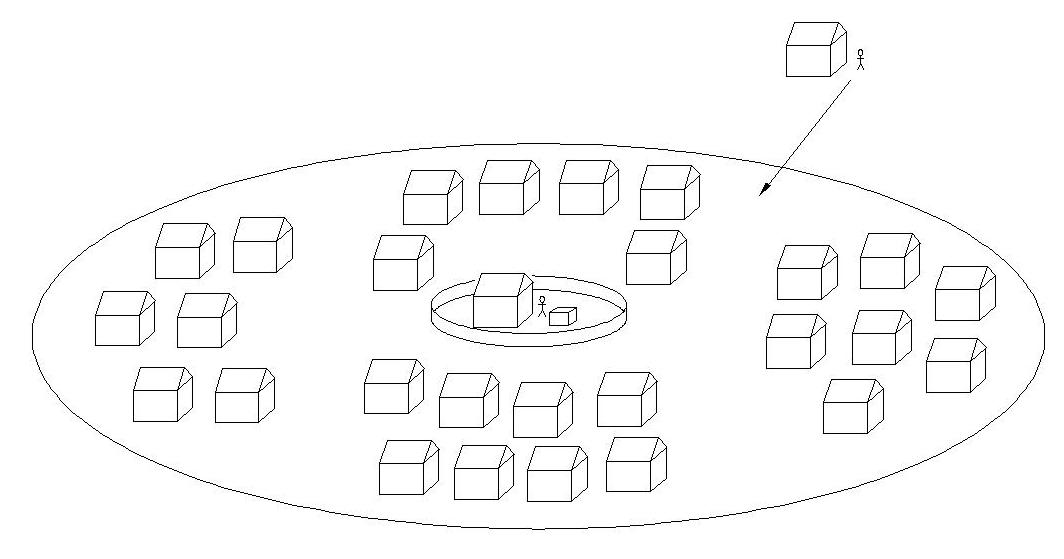
[14:1] The LORD spoke to Moses, saying, [2] “This shall be the law of the leprous person for the day of his cleansing. He shall be brought to the priest, [3] and the priest shall go out of the camp, and the priest shall look. Then, if the case of leprous disease is healed in the leprous person, (Lev 14.1-3)

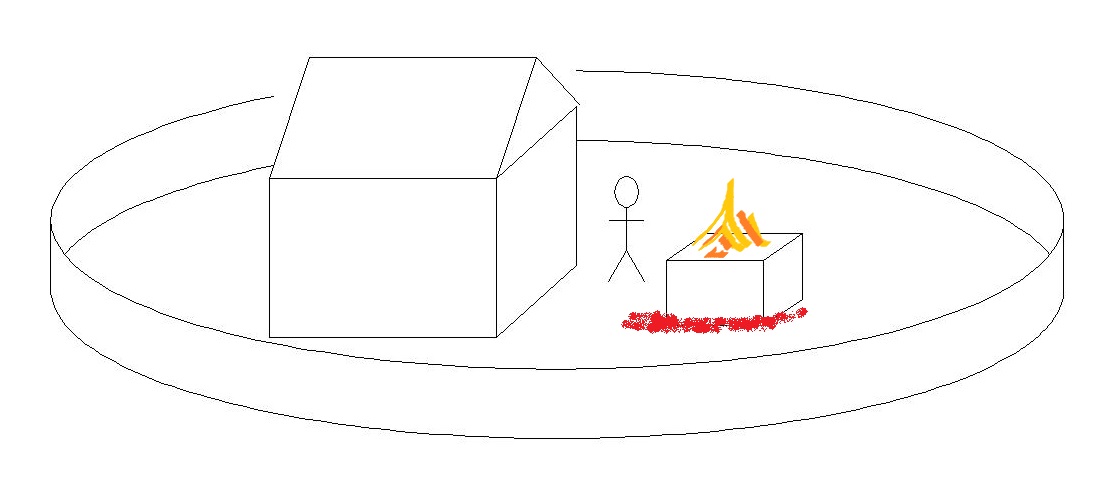
You may remember from yesterday’s post, lepers were required to live outside the camp. The priest (who Ive drawn in the centre of the camp with the tent of meeting) has to go outside the camp because the leper can’t go inside the camp.

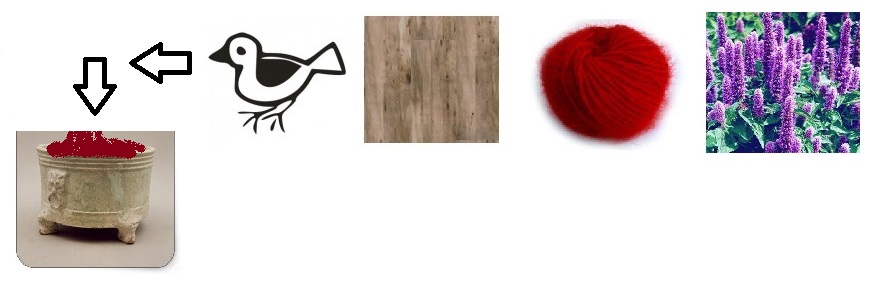
[4] the priest shall command them to take for him who is to be cleansed two live clean birds and cedarwood and scarlet yarn and hyssop. (Lev 14.4)

[5] And the priest shall command them to kill one of the birds in an earthenware vessel over fresh water. (Lev 14.5)


[6] He shall take the live bird with the cedarwood and the scarlet yarn and the hyssop, and dip them and the live bird in the blood of the bird that was killed over the fresh water. (Lev 14.6)


[7] And he shall sprinkle it seven times on him who is to be cleansed of the leprous disease. Then he shall pronounce him clean and shall let the living bird go into the open field. (Lev 14.7)

[8] And he who is to be cleansed shall wash his clothes and 
shave off all his hair and 
bathe himself in water, and 
he shall be clean. (Lev 14.8a)


And after that he may come into the camp, but 
live outside his tent seven days. (Lev 14.8b)


[9] And on the seventh day he shall 
shave off all his hair from his head, his beard, and his eyebrows. 
He shall shave off all his hair, and 
then he shall wash his clothes and 
bathe his body in water, and 
he shall be clean. (Lev 14.9)


[10] “And on the eighth day 
he shall take two male lambs without blemish, and 
one ewe lamb a year old without blemish, and 
a grain offering of three tenths of an ephah of fine flour mixed with oil, and 
one log of oil. (Lev 14.10)

[11] And the priest who cleanses him shall set the man who is to be cleansed and these things before the LORD, at the entrance of the tent of meeting. (Lev 14.11)

[12] And the priest shall take one of the male lambs and offer it for a guilt offering, 
along with the log of oil, and wave them for a wave offering before the LORD. (Lev 14.12)


[13] And he shall kill the lamb in the place where they kill the sin offering and the burnt offering, in the place of the sanctuary. For the guilt offering, like the sin offering, belongs to the priest; it is most holy. (Lev 14.13)


[14] The priest shall take some of the blood of the guilt offering, and the priest shall put it 
on the lobe of the right ear of him who is to be cleansed and 
on the thumb of his right hand and 
on the big toe of his right foot. (Lev 14.14)

[15] Then the priest shall take some of the log of oil and pour it into the palm of his own left hand [16] and dip his right finger in the oil that is in his left hand and sprinkle some oil with his finger seven times before the LORD. (Lev 14.15-16)

[17] And some of the oil that remains in his hand the priest shall put 
on the lobe of the right ear of him who is to be cleansed and 
on the thumb of his right hand and 
on the big toe of his right foot, 
on top of the blood of the guilt offering. (Lev 14.17)


[18] And the rest of the oil that is in the priest's hand he shall put on the head of him who is to be cleansed. (Lev 14.18)

Then the priest shall make atonement for him before the LORD. [19] The priest shall offer the sin offering, to make atonement for him who is to be cleansed from his uncleanness. And afterward he shall kill the burnt offering. [20] And the priest shall offer the burnt offering and 
the grain offering on the altar. (Lev 14.19-20a)

Thus the priest shall make atonement for him, and he shall be clean. (Lev 14:20b)

The person who had the skin disease can live inside the camp now.

Story of Jesus
There are a few relevant passages which speak to this. They are;

Jesus’ definition of what is truly unclean.
[14] And he called the people to him again and said to them, “Hear me, all of you, and understand: [15] There is nothing outside a person that by going into him can defile him, but the things that come out of a person are what defile him.” (Mk 7:14-15)
A comment of Peter’s in the Jerusalem council;
[10] Now, therefore, why are you putting God to the test by placing a yoke on the neck of the disciples that neither our fathers nor we have been able to bear? (Acts 15:10)
Paul’s statement that states Gentiles don't have to live by the Jewish cleanliness laws which were part of the 'works of law' (cf. Rom 3.20; Gal 2.16). But the Jewish believers are free to keep observing them.
[28] For we hold that one is justified by faith apart from works of the law. [29] Or is God the God of Jews only? Is he not the God of Gentiles also? Yes, of Gentiles also, [30] since God is one—who will justify the circumcised by faith and the uncircumcised through faith. [31] Do we then overthrow the law by this faith? By no means! On the contrary, we uphold the law. (Rom 3:28-31)